Point it at a stone. Know what you found.
Photograph any rock, mineral or gemstone. ScanMyRock names it in seconds, shows honestly how sure it is, and teaches you what makes it what it is.
Free to download. The whole catalogue is open to browse, no account needed.
- Over 2,000 curated entries
- Honest confidence scores
- Hands-on identification tests
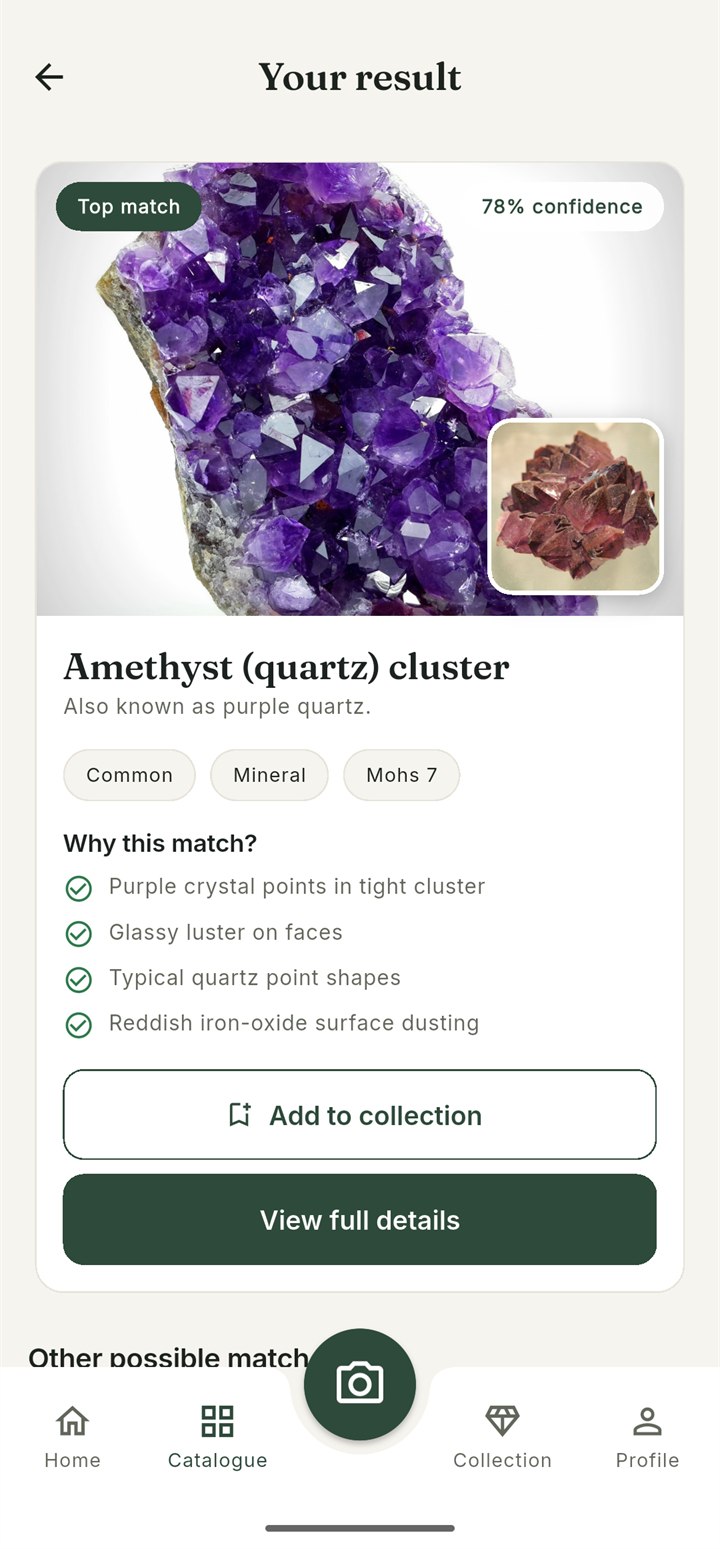
From "what is this?" to a name, in three steps
Built for one hand, outdoors, in bright daylight. The camera is the front door of the whole app.
Photograph it
Point your camera at the stone, or pick a photo you already took. Beach, riverbed, shop shelf or the back of a drawer: it all works.
Compare the matches
You get a ranked list of candidates, each with a confidence score, a reference photo and the visual clues that led there. You make the final call.
Learn it, keep it
Open the full reference entry, run the hands-on tests, then save the find to your collection with where and when you found it.
A field guide, not a flashcard
Every one of the 2,000+ entries is fully curated: written for beginners, checked by hand, and deep enough to keep a seasoned rockhound reading.
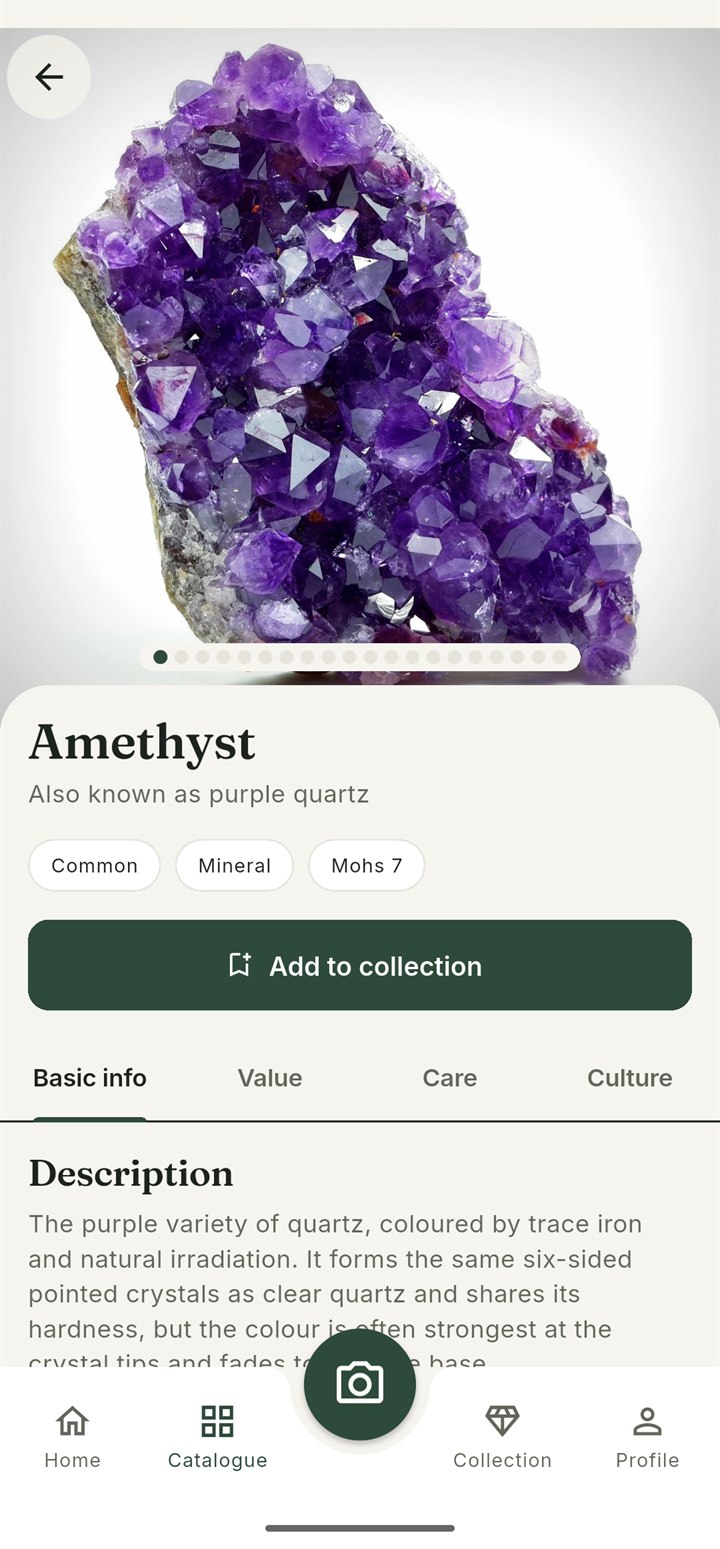
Know it properly
Each entry explains what the stone is, how it forms, and how to recognise it, in plain language. Technical terms are welcome here, but they never arrive unexplained.
- Hands-on tests you can actually do. Scratch test, streak, cleavage, magnet, with the expected result for each.
- Look-alikes, with the tell. Amethyst or purple fluorite? The entry shows the one detail that settles it.
- Fakes and treatments. Which stones are commonly faked, how to spot the fakes, and which treatments are normal in the trade.
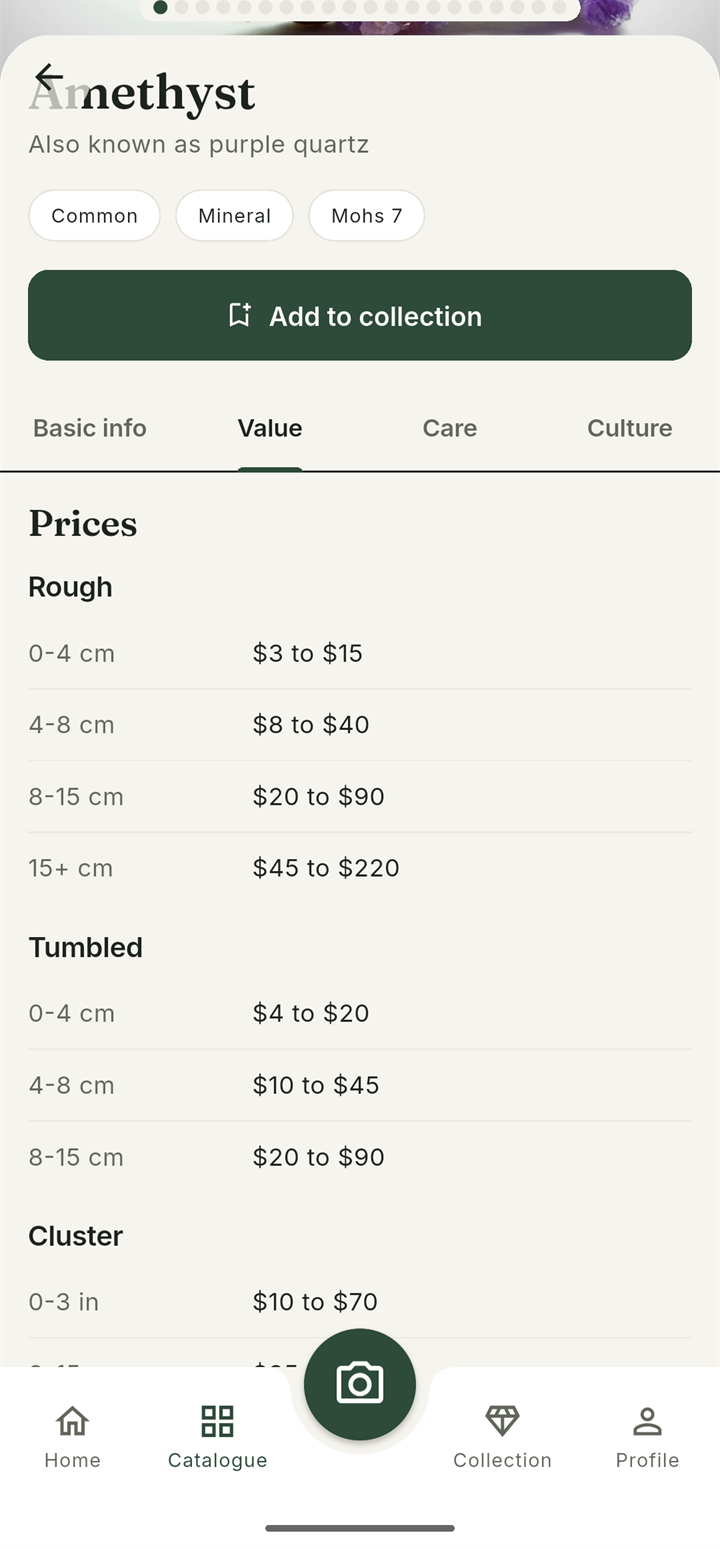
Know what it's worth
Estimated market ranges by specimen type and size, from a small tumbled stone to a cluster bigger than your hand. Sanity-check a price tag before you pay it, or find out the pebble in your pocket is worth more than you thought.
They are honest estimates, clearly labelled, never appraisals.
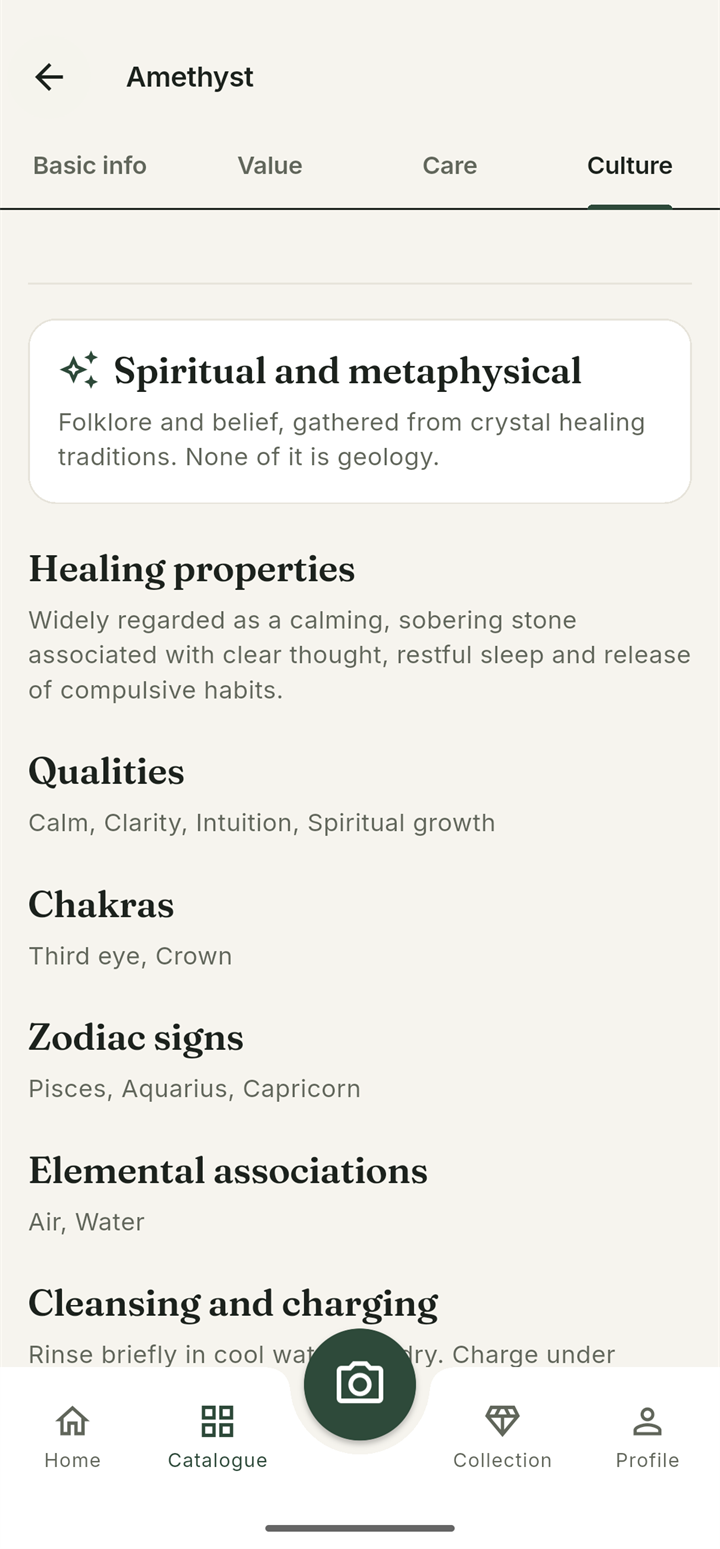
The story as well as the science
For the stones that carry it, there is a whole chapter of meaning: healing associations, chakras, zodiac signs, how to cleanse and charge, and the cultural history behind it all.
It sits in its own clearly labelled place, told as folklore and tradition. It never blurs into the geology.
Care that prevents heartbreak
Can it get wet? Does sunlight fade it? The two mistakes people actually make, answered up front for every stone.
Where in the world
Countries, regions and famous localities for every entry, down to the mines a collector would recognise.
Answers to real questions
"Will my amethyst fade?" "Why is my geode purple only on the surface?" Every entry has a beginner's FAQ.
Browse without scanning
The whole catalogue is searchable on its own. Wander it like a reference library, no photo required.
A collection that grows
Save finds with your own photo, where you found it, and your notes. Correct the identification if you know better.
Photos, credited
Every catalogue photograph carries its licence and photographer credit, right where the image appears.
A suggestion, never a verdict
Identifying a stone from one photo is genuinely hard, and apps that pretend otherwise are guessing at you. ScanMyRock shows its confidence as a number, ranks the alternatives, and tells you which hands-on test would settle the question. A 38% match reads like a 38% match.
The visual evidence is strong. Worth confirming with one quick test.
A solid lead. Check the look-alikes before you commit.
Several candidates are plausible. The tests exist for exactly this case.
The app says so, plainly. A sharper photo in better light usually helps.
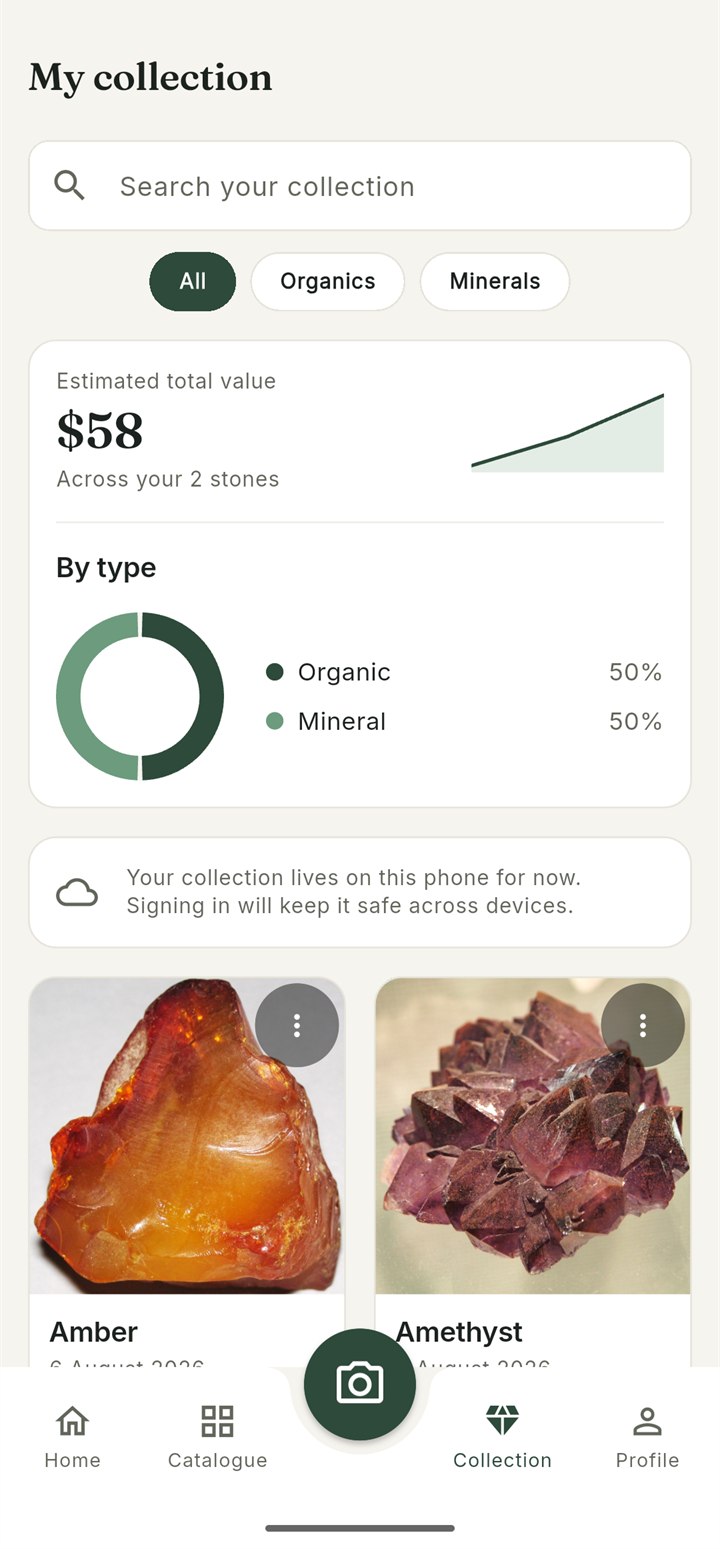
Build a collection worth coming back to
Every keeper gets its own card: your photo, the identification, where you found it, and your notes. And the shelf adds itself up, with an estimated value across your stones and a breakdown of what you actually collect.
You know your stones best, so you can always override an identification. The app keeps your word over its own.
Rigorous where it should be, open where it can be
The science
Hardness, density, crystal system, streak, cleavage, formation, age. Measured, sourced and stated plainly, with the jargon translated as you read.
The story
Chakras, zodiac signs, cleansing rituals, and why Greek bishops wore amethyst. Cultural tradition, told as tradition, for the stones that carry it.
Made for the people who stop and pick things up
"It told me my 'amethyst' was probably fluorite at 62%, and then showed me the scratch test to prove it."
"My daughter and I scan everything we find on the beach now. The entries are written so a nine-year-old and a forty-year-old both learn something."
"Half my shelf was labelled wrong. I went through it with the look-alike tells, and I finally know what I actually own."
Frequently asked questions
How accurate is it?
Good, and honest about when it is not. Some stones are visually unmistakable and score high; others genuinely cannot be told apart from a photo alone, and the app says so instead of bluffing. Every result comes with ranked alternatives and the hands-on tests that settle the difference.
What can it identify?
Rocks, minerals, crystals and gemstones: over 2,000 species and varieties, from beach pebbles to collector minerals, and the catalogue keeps growing. Rough, tumbled, clusters and cut stones all work.
How much does it cost?
ScanMyRock is free to download, and the whole reference catalogue is open to browse without an account. Your finds save on your phone straight away; adding an account keeps your collection safe across devices.
Can I trust the prices?
They are estimated market ranges for typical specimens by type and size, and they are labelled as exactly that. They are a sanity check for a price tag, not an appraisal. For insurance or sale of a valuable piece, see a professional.
Is the healing content medical advice?
No. It describes cultural traditions and beliefs around stones, clearly separated from the scientific data, and is presented as folklore. It is not medical guidance of any kind.
Do I need an internet connection?
Identification runs in the cloud, so scanning needs a connection. A patchy signal is fine: your photo is small, and results arrive in a few seconds.
We'd love to hear from you
A question about the app, a find you're proud of, an idea we should build: whatever it is, write to us. We read everything that comes in.
Prefer email? support@scanmyrock.com
The next stone you pick up has a name
Join the collectors, beachcombers and curious pocket-fillers who stopped wondering.